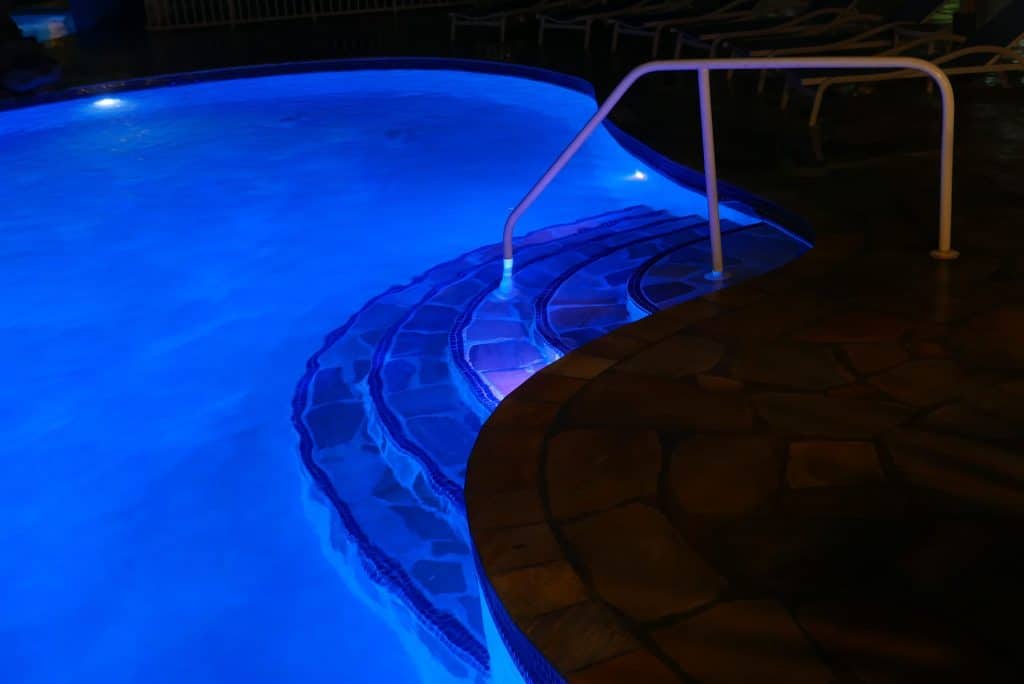
For a swimming pool in New Orleans, the best lighting is usually LED fixtures made and listed for pool use in the water, paired with wet-location-rated fixtures on the deck. LEDs draw less power and last longer than older incandescent or halogen pool lamps. Around the pool, corrosion-resistant materials matter as much as the rating, and anything placed near the water belongs with a licensed electrician.
At Big Easy Lighting, we know pool lighting problems are rarely about design. They usually start with a fixture that looked fine for one summer and is now streaked, fogged, or dead.
The cause is often the same. A fixture built for a sheltered location was installed somewhere it takes direct water, and Louisiana humidity finished the job faster than a drier climate would.
Choosing the right type of lighting, and reading the rating on the box, prevents that failure. Contact us today to choose the right lighting for your pool or water feature.
Which Swimming Pool Lighting Holds Up Best in New Orleans Humidity?
The best lighting for most swimming pools is LED, using in-water fixtures made and listed for pools and wet-location-rated fixtures on the deck and surround. LEDs draw less power and outlast older incandescent and halogen pool lamps. In our humid climate, sealed housings in corrosion-resistant materials decide how long any of it lasts.
A pool surround in this climate is one of the harshest environments a light fixture can live in. It combines standing water, splash, chlorine or salt in the air, and humidity that rarely drops.
Add the daily temperature swing that pulls air in and out of any fixture that is not properly sealed, and moisture ends up inside the housing regardless of how dry the day looked. That cycle is what corrodes contacts and fogs lenses. Courtyard pools and fountains on commercial properties sit in the same environment, so commercial lighting projects here get specified against the same exposure.
What the Fixture Rating Actually Means
Every listed fixture carries a location rating, and the difference between the two common ratings decides whether a fixture survives beside a pool.
Damp Location Versus Wet Location
A damp-location listing means the fixture can handle moisture in the air and occasional condensation, but not direct contact with water. Roofed open porches, sheltered soffits, and similar partially protected spots are damp locations.
A wet-location listing means the fixture is built to take direct exposure, including rain, spray, and splash. Anything within reach of pool water, a fountain, or an unsheltered deck edge needs this rating rather than the damp-location one.
Retailers stock both side by side, and the packaging looks similar. Checking which one you are holding takes five seconds and saves a replacement.
Why the UL Listing Matters
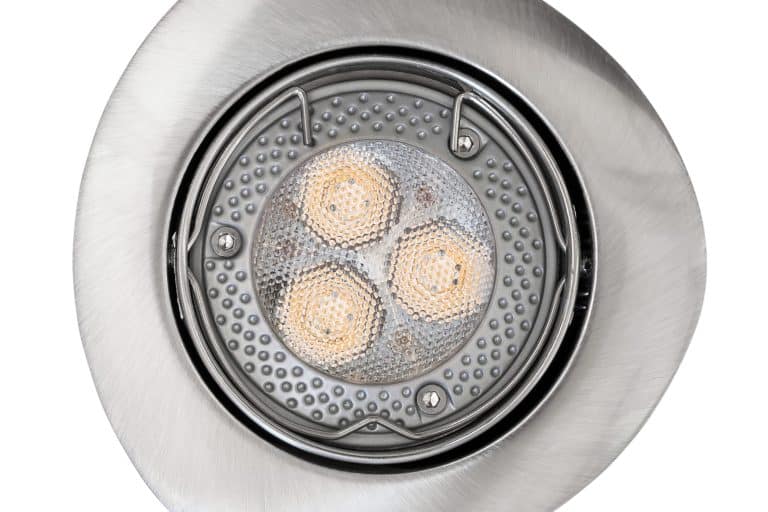 A listing means an independent laboratory tested the fixture against a published standard for that environment. It is not a marketing claim by the manufacturer.
Unlisted fixtures are common online and are frequently sold with language that sounds like a rating without being one. “Weatherproof” and “outdoor-safe” are descriptions, not listings.
Electrical inspectors rely on the marking itself rather than on the product description. Any work that will be inspected as part of a permitted job depends on that marking.
Ingress Protection Ratings and Where They Fit
Some fixtures also carry an IP rating, which is a two-digit measure of how well the housing keeps out solids and water. The second digit is the one that matters around a pool.
An IP rating is useful information, but it does not by itself replace a wet-location listing in the United States. Where both appear, read the listing first and treat the IP number as supporting detail.
Submerged fixtures are a separate category again, with their own requirements and their own installation rules. Those fixtures belong with a licensed electrician rather than a homeowner.
Symptoms That Point to the Wrong Fixture
Most wet-area lighting problems announce themselves before the fixture dies. Reading the symptom tells you whether the fixture was wrong or the installation was.
Condensation or Fogging Inside the Lens
Visible moisture inside a sealed housing means the gasket has failed or the fixture was never sealed for that exposure. Fogging is usually the earliest visible sign that a damp-rated fixture is in a wet location.
Once water is inside, the corrosion has already started even if the light still works. A drain-and-reseal rarely holds, because the original seal was not built for the job.
Replacing the fixture with a correctly rated one is the durable fix. Doing that before the corrosion reaches the wiring keeps the job a fixture swap rather than a rewire.
Corrosion at the Base and the Fasteners
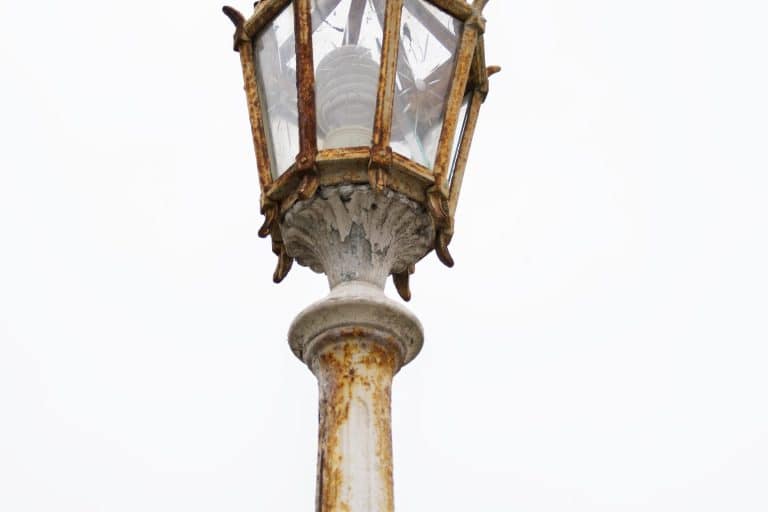 Streaking or pitting where the fixture meets its mount usually points to the wrong metal for the environment rather than a failed seal. Standard steel fasteners beside a pool tend to rust regardless of how good the fixture is.
Marine-grade stainless, powder-coated aluminum, brass, and copper all hold up considerably better in this setting. Mixed metals accelerate the problem, so the fixture and its hardware should match.
Salt-water pools tend to be harder on metal hardware than traditionally chlorinated ones, which is worth raising with whoever specifies the fixtures.
GFCI Tripping or Repeated Breaker Trips
A ground-fault device that trips repeatedly around a pool is doing exactly what it exists to do. The correct response is never to bypass it or replace it with a standard breaker.
The usual causes are water inside a fixture, a damaged cable, or a failing connection. All three are found by inspection rather than by guessing.
Persistent tripping in a wet area is the one symptom worth acting on immediately. Call a licensed electrician rather than resetting it again.
Dimming, Flickering, or Color Shift
Flicker in outdoor fixtures often traces back to moisture at a connection rather than to the lamp. Corroded contacts raise resistance, and the light responds before anything else shows.
Color shifting between fixtures that were installed together often means one is degrading faster than the other. Replacing the pair keeps the surround looking intentional.
Our residential lighting service can help you plan correctly rated replacements when several fixtures around the deck show these signs.
Matching the Fixture to the Exposure
The right choice comes down to where the fixture actually sits and how much water reaches it. The table below matches the common positions around a pool to the minimum listing and the material worth paying for.
| Location | Minimum Listing | Material Worth Paying For |
|---|---|---|
| Covered patio away from the pool | Damp location | Powder-coated aluminum |
| Open pool deck and coping edge | Wet location | Marine-grade stainless or brass |
| Fountain and water-feature surround | Wet location | Brass or copper, sealed lens |
| In-ground uplights in wet planting beds | Wet location | Composite or brass with a drainage path |
| Anything submerged | Purpose-built submersible only | Manufacturer-specified, professionally installed |
Placement near water is governed by code as well as by common sense, and the required clearances are not something to estimate from a product page. A licensed electrician sets those distances against the current requirements, which differ by fixture type and by operating voltage.
Specifying the right fixture for each of those positions is straightforward once the exposure is written down. Wet planting beds and water-feature surrounds sit in the same category, which is why our landscape lighting installation work uses corrosion-resistant, weather-rated systems. Guessing at the listing from a showroom floor is how a pool surround ends up failing well before it should.
Get the Rating Right and the Fixtures Last
A pool surround does not need expensive lighting so much as correctly specified lighting. A modest wet-rated fixture in the right material is likely to outlive a premium damp-rated one beside open water.
At Big Easy Lighting, we match fixtures to the exposure rather than to the catalog photo, and our electricians support you from design to installation. Call us today to review the fixtures around your pool before the next one fails.
Frequently Asked Questions
What Is the Difference Between Damp-Rated and Wet-Rated Light Fixtures?
A damp-rated fixture handles humidity and condensation but not direct water contact, which suits covered porches and sheltered soffits. A wet-rated fixture is built for rain, spray, and splash. Anything within reach of pool or fountain water needs the wet-location listing.
Can I Use Regular Outdoor Lights Near a Pool?
Not reliably. Many fixtures sold as outdoor are damp-rated only, which is not sufficient beside open water. Check for a wet-location listing rather than for the word outdoor on the packaging, and leave the placement near the water to a licensed electrician.
How Do I Add Lights to an Existing Pool?
If the pool has an existing light niche, the old fixture can be swapped for an LED. Adding new in-water lights usually means retrofit fixtures designed for existing pool walls or fittings, or lighting the water from the deck with wet-rated fixtures. Either way, the wiring belongs with a licensed electrician.
Why Does My GFCI Keep Tripping Around the Pool?
A tripping GFCI is detecting current leaving the circuit where it should not, which is exactly its purpose. Water inside a fixture, a damaged cable, or a corroded connection are the usual causes. Never bypass it or swap it for a standard breaker; have it inspected.
How Do I Replace a Pool Light Fixture?
Replacing a pool light is a job for a licensed electrician rather than a homeowner. The fixture sits underwater in a niche and connects to the pool’s bonded electrical system. In general terms, the replacement has to match the existing niche, voltage, and cord length, and the circuit stays de-energized throughout the work.
Do Outdoor Lights Near Water Need to Be Low Voltage?
Not necessarily. Low-voltage fixtures are common around pools and planting beds because they reduce shock risk and simplify installation, but line-voltage fixtures can also be used when correctly listed and placed. Neither replaces the right rating, and which approach suits a specific location is a question for a licensed electrician.
What Does an IP Rating Mean on a Light Fixture?
An IP rating is a two-digit code describing how well the housing keeps out solids and water, with the second digit covering water. It is useful supporting information. In the United States it does not replace a wet-location listing from a testing lab such as UL, so read the listing first.
How Far From the Water Do Light Fixtures Need to Be?
Minimum clearances around pools and water features are set by electrical code rather than by preference, and they vary with the fixture type and voltage. They are not worth estimating from a product listing. A licensed electrician confirms them against the current requirements.

Big Easy LightingOutdoor and landscape lighting for homes and businesses across New Orleans and the Northshore. Free estimates and evening demos.