The most common outdoor lighting problems in New Orleans are water inside fixtures, corrosion, mounts knocked loose by storm debris, and damaged cable that trips ground-fault protection. Before a storm, bring portable lights inside and check mounts and covers on the rest. After it, leave everything off until fixtures and ground are dry, and have anything that took water or debris checked by a licensed electrician.
At Big Easy Lighting, we install and maintain outdoor lighting built for our storm-prone climate. After a storm, damaged fixtures tend to fall into two groups: ones that need cleaning and ones that were switched back on too early.
The second group is the expensive one, and it is largely avoidable. Everything below is about staying in the first.
The Atlantic hurricane season runs from June 1 to November 30 and peaks around September 10, according to the NOAA National Hurricane Center. Contact us today to have your outdoor lighting checked before the next watch is issued.
Which Outdoor Lighting Problems Show Up Most After New Orleans Storms?
The most common outdoor lighting problems here are water getting inside fixtures, corrosion at connections and mounts, fixtures knocked loose by debris, and damaged cable that keeps tripping a ground-fault device. Storm season makes every one of them worse, and the ones that look worst are not always the ones that fail.
Obvious Physical Damage
A fixture knocked off its mount, a cracked lens, or a bent post is straightforward to identify and usually simple to price. Photograph it in place before removing it.
Much of the damage comes from debris striking the fixture rather than from wind acting on it. Branches, planters, and garden furniture are typical culprits.
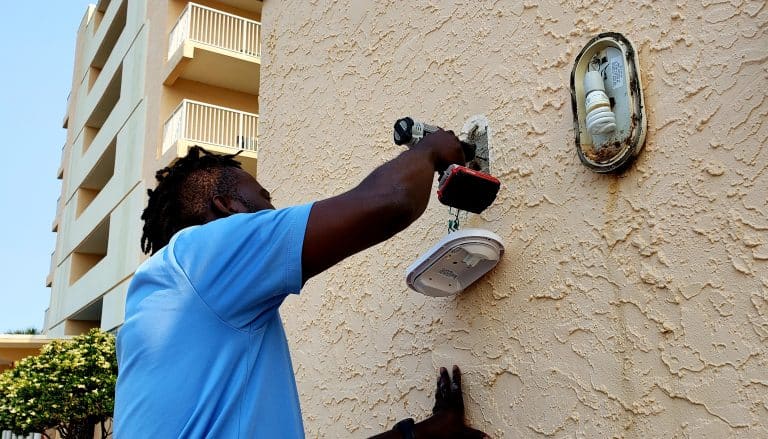
Leave anything still attached to live wiring where it is. A loose fixture hanging from its cable is a job for a licensed electrician rather than for a ladder.
Water That Got Inside
 Condensation on the inside of a lens, standing water in the base, or a waterline visible on the housing all mean the fixture took water. It may still light, and it is still compromised.
An in-ground fixture in a well that filled may have sat submerged longer than it appears. That is the category most worth having assessed rather than tested.
Drying with the power off is the correct first move in every case. Opening a sealed fixture to dry it faster can compromise its seal for good.
Faults That Only Show on the Circuit
The hardest damage to see is a cable nicked by debris or a connection that has corroded since the water receded. Nothing looks wrong, and the circuit will not hold.
This is often what a ground-fault device is detecting when it refuses to reset. It has found a fault that an inspection by eye cannot find.
Tracing it means testing the run rather than looking at the fixtures. That is electrician work, and it is why a tripped device should not be reset again and again.
What to Do in the 48 Hours Before a Storm
The window between a watch being issued and the weather arriving is short, and outdoor lighting is rarely the first thing anyone thinks about. Securing most residential fixtures is a short job.
Work from the ground up and from removable to fixed. Anything that can be taken down and put inside is the fastest win, and it also removes the items most likely to become projectiles.
Do not start new work in this window. Tightening a loose mount is sensible; opening a fixture or rewiring anything is not.
Securing Fixtures Before the Weather Arrives
The goal is to reduce what can move, what can fill with water, and what can be pulled loose by wind.
Bring in Everything Portable
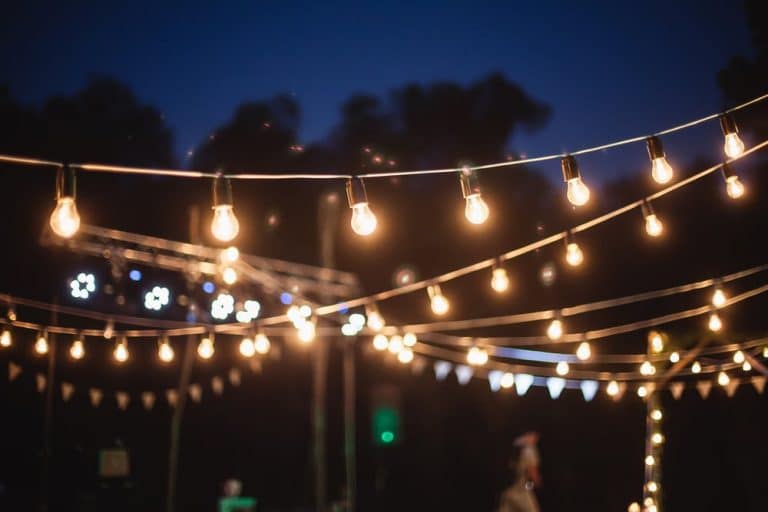
String lights, stake lights, portable uplights, and anything on a temporary stand come inside first. They are the items most likely to end up in a neighbor’s window.
Coil cable loosely rather than tightly, and store it dry. A kinked low-voltage cable that sat in water can develop a fault later.
Take a photograph of the layout before you dismantle it. Reinstalling to the same positions afterward takes minutes instead of an afternoon.
Check Mounts, Covers, and Gaskets
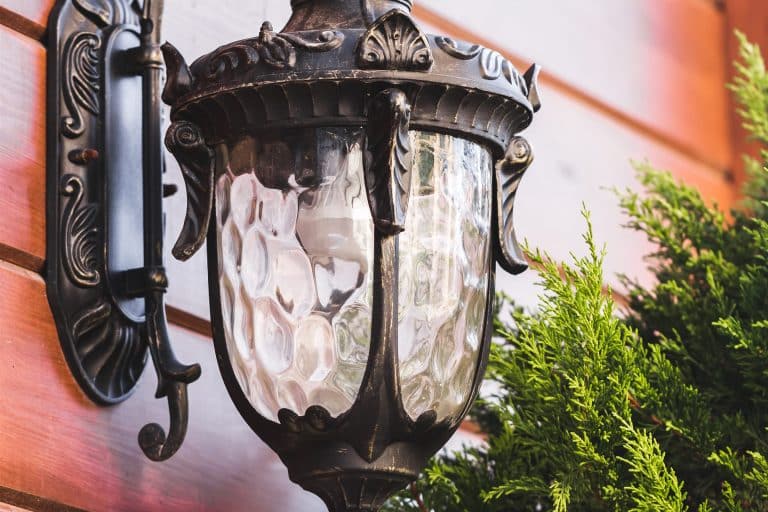 Walk every fixed fixture and put a hand on it. Anything that moves against its mount needs the fastener tightened before the wind finds it.
Confirm that every weatherproof cover actually closes and latches, including the in-use covers over receptacles. An open cover is a direct path for water into a live enclosure.
If a gasket is visibly deteriorated or a lens is cracked, note it rather than attempting a repair now. That fixture is a post-storm job.
Clear What Is Above and Around the Fixtures
Overhanging limbs can damage even a well-installed fixture. Anything obviously loose above a light is worth addressing before the season rather than during a watch.
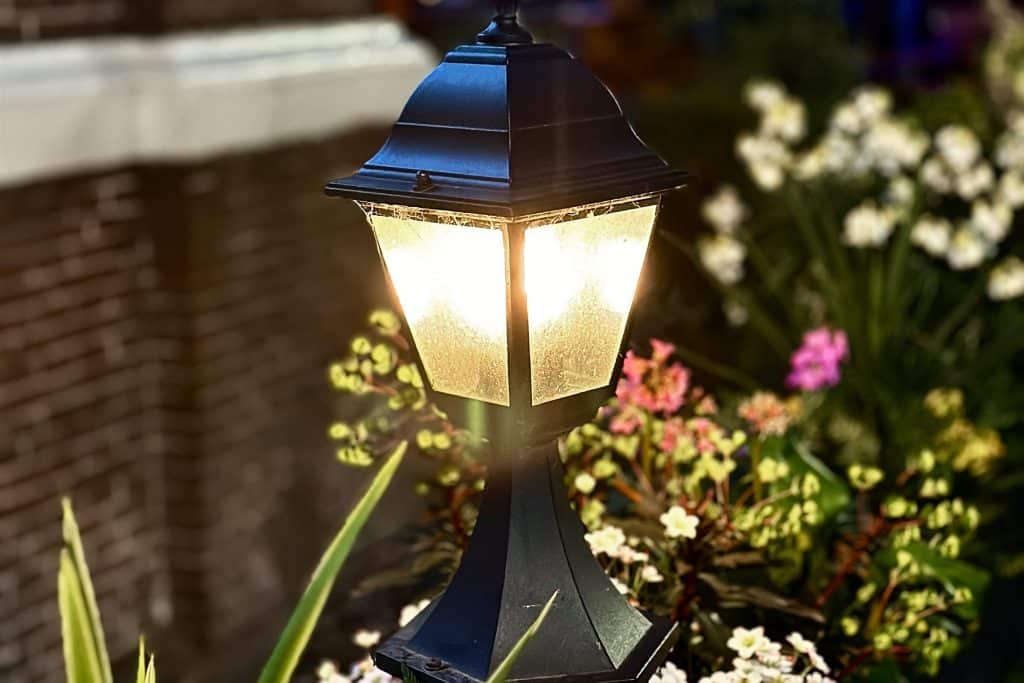
Clear leaves and debris out of in-ground fixture wells so water can drain rather than pool. In-ground wells are a common part of a landscape lighting layout, so walk the whole run rather than only the fixtures nearest the house.
Move planters, furniture, and anything else that could be blown into a fixture. Those are typical sources of the impact damage described above.
Know Where Your Disconnects Are
Find the breaker that feeds the outdoor lighting and the transformer, and confirm you can reach it in the dark. That location is easier to establish now than at two in the morning.
Turning outdoor lighting circuits off before a major storm is a reasonable precaution, particularly if flooding is expected. It costs nothing and removes power from anything that gets submerged.
Label the breaker if it is not already labeled. That label is worth more during a storm than at any other time.
After the Storm, in This Order
| Step | What to Do | What Not to Do |
|---|---|---|
| 1. Look before touching | Inspect from a distance for downed lines and standing water | Do not walk into standing water near any fixture or outlet |
| 2. Leave the power off | Keep outdoor circuits off until everything is dry | Do not switch on to see what still works |
| 3. Let it dry | Give submerged fixtures and wells time to drain fully | Do not open a sealed fixture to speed it up |
| 4. Inspect and photograph | Record damaged fixtures, mounts, and cable for your records | Do not clear damaged fixtures before photographing them |
| 5. Call a licensed electrician | Have anything submerged or impact-damaged assessed | Do not repeatedly reset a tripping GFCI or breaker |
That order matters more than the individual steps. Many avoidable post-storm failures come from energizing something before it is dry.
When a GFCI Will Not Reset
A ground-fault device that refuses to reset after a storm is usually not broken. More often it is telling you there is still moisture or damage somewhere on that circuit.
Resetting it repeatedly does not clear the condition and is not a diagnostic step. Each attempt energizes a circuit that the device has already identified as unsafe.
Give the circuit time to dry with the power off, then try once. If it still will not hold, that is the point to stop and call a licensed electrician rather than keep trying. If the device itself went underwater, skip the reset, because a submerged ground-fault device is meant to be replaced rather than dried out.
The same applies to a breaker that trips immediately on reset, anywhere in New Orleans or the nearby communities our service areas page lists. Stop at the first failed reset and leave the rest to a licensed electrician.
Prepare Once, Then Follow the Order
Storm preparation for outdoor lighting is a short job done once and a set of rules followed afterward. Neither part is difficult, and both are considerably cheaper than replacing fixtures that were energized while wet.
At Big Easy Lighting, we offer ongoing maintenance and service support to keep outdoor lighting in working condition. Call us today to schedule maintenance on your outdoor lighting before the next storm.
Frequently Asked Questions
Should I Turn Off Outdoor Lighting Before a Hurricane?
Turning off the breaker feeding outdoor lighting and the transformer is a reasonable precaution, particularly where flooding is expected. It removes power from anything that may end up submerged. Locate and label that breaker before the season rather than during a storm.
Can Outdoor Light Fixtures Survive Being Submerged?
Some can and many cannot, and there is no way to tell by looking. A fixture that has been underwater should be dried fully with the power off and then assessed by a licensed electrician before it is energized. Switching it on to test is the common mistake.
Why Will My GFCI Not Reset After a Storm?
Usually because it is still detecting a fault, such as moisture on the circuit or a damaged cable or fixture. Let the circuit dry with the power off, try once, and if it still will not hold, call a licensed electrician. A ground-fault device that was itself underwater should be replaced rather than reset.
Can You Leave Outdoor Lights Outside in the Rain?
Yes, if they are rated for it. Fixtures listed for wet locations are built to take direct rain, while damp-rated fixtures belong under cover and indoor-only lights and cords should never stay out. In New Orleans storms, bring portable string and stake lights inside even when they are rated.
When Is Hurricane Season in New Orleans?
The Atlantic hurricane season runs from June 1 to November 30 and peaks around September 10, according to the NOAA National Hurricane Center. Most activity falls between mid-August and mid-October, which is the stretch worth being prepared through, with fixtures checked before it starts.
Is It Safe to Reset a Tripping Breaker After Flooding?
No. A breaker that trips immediately on reset is reporting a fault on that circuit, and repeated attempts energize equipment that may be wet or damaged. Leave it off and have the circuit assessed by a licensed electrician before restoring power.
How Do I Check Outdoor Lighting After a Storm?
Look before touching anything, stay out of standing water, keep the circuits off until everything is dry, then photograph any damage for your records before clearing it. Have submerged or impact-damaged fixtures assessed rather than testing them by switching them on.
Does Storm Damage to Outdoor Lighting Need a Professional?
Anything submerged, impact-damaged, or on a circuit that will not reset should be assessed by a licensed electrician. Cleaning debris and reinstalling portable fixtures you removed yourself is straightforward. The line sits at anything involving wiring, enclosures, or energizing a circuit.

Big Easy LightingOutdoor and landscape lighting for homes and businesses across New Orleans and the Northshore. Free estimates and evening demos.