Aug 24, 2026
How to Create a Festive Atmosphere With Lighting in New Orleans, LA
-
 By Admin


Opening Hours Mon - Fri: 8:00 AM - 6:00 PM

Talk to an Expert 504-784-6858
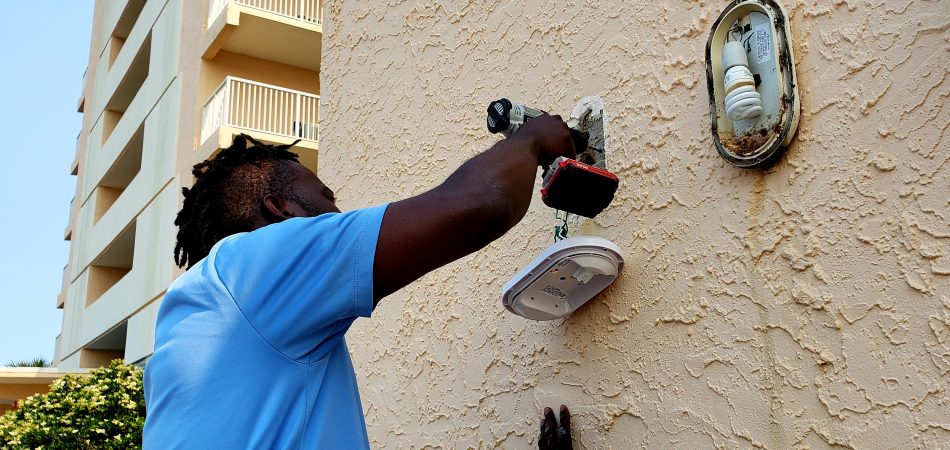
In New Orleans, permits draw the line more than voltage does. The city requires an electrical permit to install, repair, replace, or alter electrical equipment, with only light bulbs and fuses excepted, and that permit can only be pulled by a Class A licensed contractor. Solar fixtures, plug-in lighting, and low-voltage runs fed by an existing outdoor outlet stay on the do-it-yourself side. Warranty terms and insurance also shift depending on who did the work.
At Big Easy Lighting, our crews have finished a lot of projects that started as weekend jobs. The pattern is consistent: the fixtures went in fine, and the power supply was the part that stopped everything.
The question is not whether a homeowner is capable. It is which category of work carries consequences that extend past the project itself.
This guide covers where the line actually sits, what is genuinely safe to take on, and what professionals do differently. Contact us today to get a straight answer on which side of the line your project falls.
Voltage is the cleanest technical divider, since low-voltage systems run at a level unlikely to injure someone while line-voltage work carries real shock and fire risk. Permits draw the legal line, and in New Orleans that line sits further toward the homeowner than the voltage alone would suggest.
The second factor is permanence. Plugging something in is reversible, and cutting into a wall or running a new circuit is not, which is why the second category gets inspected and the first does not.
The third factor is who carries the consequence. A homeowner-installed low-voltage path light that fails is an inconvenience, while unpermitted line-voltage work can surface as an insurance question or a problem at resale. That is why our approach to a lighting project starts with permits rather than design.
Plenty of outdoor lighting is within reach for a homeowner with basic tools, though New Orleans permit rules narrow the list further than skill alone would. These four categories cover where the line actually falls.
Low-voltage landscape systems run off a transformer that steps household current down to a much safer level, and the fixture-side work involves no exposed line voltage at all. Laying cable, staking fixtures, and adjusting aim are genuinely homeowner tasks.
The one part that is not is how the transformer itself gets fed. If it plugs into an existing weather-rated, ground-fault-protected outdoor outlet, you are fine, and if it needs a new outlet, that outlet is electrician work. That single detail decides whether the project stays a weekend job or becomes permitted work.
Solar and battery-powered fixtures have no electrical connection to the house at all, which removes the risk category entirely. Placement and sun exposure are the only real variables. No permit question arises at all.
The limitation is output and consistency. They work well as accent and path lighting, and poorly as the primary lighting for a space, particularly under heavy tree cover. Under a mature live oak canopy, expect shorter run times and dimmer output through the wetter months.
Swapping an existing fixture for a similar one on the same circuit looks like the easiest job on this list, and in New Orleans it is not a do-it-yourself one. Replacing electrical equipment is permit work here even when the wiring and the circuit are unchanged. Only light bulbs and fuses are named as exceptions to that requirement.
Two cautions apply outdoors. The replacement has to carry the correct location rating for its exposure, and if the existing box or wiring looks corroded or damaged, that discovery ends the do-it-yourself job rather than becoming part of it.
Anything that plugs into an existing weather-rated outdoor outlet is straightforward, provided the cords are outdoor-rated and routed sensibly. String lights, portable fixtures, and event lighting all sit here.
The constraint is circuit capacity rather than skill. Knowing which outlets share a breaker prevents the most common failure, which is everything going dark at once. That matters most for party and holiday runs, where fixture counts climb faster than anyone plans for.
The cost of a failed lighting project is rarely the fixtures. It is the rework, and rework outdoors usually means digging up what was just buried.
Unpermitted electrical work carries a longer tail. It can complicate an insurance claim if a fault causes damage, and it often surfaces during a home inspection at sale. The same exposure applies on the commercial lighting side, where a failed inspection can hold up an occupancy sign-off.
Warranty is the quiet one. Manufacturer warranties on lighting equipment frequently depend on installation conditions, and some are void when a product is installed outside its specified use. Check the terms before the box is opened rather than after a fixture fails.
The visible work looks similar. What differs is everything that happens before a fixture goes in the ground.
The first question on any install is what the existing electrical service can actually carry and whether the circuit intended to feed the lighting has room. That is a calculation, not an estimate.
Getting it wrong shows up later as nuisance tripping that nobody can explain. Planning it up front is far cheaper than diagnosing it after the yard is finished. The same calculation settles whether a new circuit is needed, which changes the permit path entirely.
Permit scope is set locally, and it is broader than most homeowners expect. In New Orleans, the Department of Safety and Permits requires an electrical permit to install, repair, replace, or alter electrical equipment, with light bulbs and fuses named as the exception.
That permit can only be pulled by a contractor holding a Class A electrical license from the City, so it is not a step a homeowner can complete alone. That is a substantial part of what separates a professional install from a competent amateur one. It also means the licensing question comes before the design question rather than after it.
Every fixture carries a location rating, and matching it to actual exposure rather than apparent shelter is where installs commonly go wrong. A covered porch and an exposed wall are different environments even a few feet apart. Gulf humidity, driving rain, and salt-carrying wind push most exteriors here toward the stricter rating.
Our residential lighting work treats rating and placement as one decision rather than two. In this climate, the fixture rated one step beyond its location is the one still working years later.
Professional installs come with documentation of what was installed, where the runs go, and how the system is fed. That record is what makes a future repair a small job rather than an excavation.
It also preserves manufacturer warranty coverage where installation conditions are a term. Permit and inspection records serve the same purpose at resale, when a buyer’s inspector asks who did the electrical work. All three matter more than they seem at the time.
Sort your project into the two categories before pricing anything. If it plugs in or runs low voltage off an existing outlet, it is likely yours to take on, and if it touches line-voltage wiring or the panel, it is not.
At Big Easy Lighting, we tell homeowners plainly which parts they can handle and bring in licensed electricians for the work that legally requires them. Call us today to find out which side of that line your project sits on.
Low-voltage landscape lighting is generally within reach for a homeowner, since the fixture-side work involves no exposed line voltage. Laying cable, staking fixtures, and aiming them are all reasonable tasks. The exception is how the transformer gets powered: if it needs a new outdoor outlet, that outlet is licensed electrician work.
It depends on the voltage and the connection. Plug-in and low-voltage systems fed from an existing weather-rated outlet usually do not require one. Anything involving line-voltage wiring, a new circuit, or a panel connection does, and that work typically requires a permit and inspection as well.
In New Orleans, yes, for nearly all of it. The city requires an electrical permit to install, repair, replace, or alter electrical equipment, with replacement of light bulbs and fuses named as the only exceptions. Outside Orleans Parish, scope varies, so confirm with your own parish or city permit office before work begins.
The low-voltage portion runs at a level that is unlikely to cause injury, which is why these systems are marketed to homeowners. The part that still carries risk is the transformer’s connection to household current. If that connection already exists as a weather-rated outdoor outlet, the rest of the install is straightforward.
It can. Manufacturer warranties on lighting equipment often include conditions about how and where a product is installed, and some are void when a fixture is used outside its specified location rating. Read the warranty terms before opening the box rather than discovering the exclusion after a fixture fails.
Underestimating circuit capacity, followed closely by using fixtures rated for the wrong exposure. Both problems appear after the install is finished, when the breaker starts tripping or fixtures fail early. Counting which outlets share a circuit and matching fixture ratings to real exposure prevents most of it.
It varies with the scope, the number of fixtures, and whether new circuits or permits are involved. A straightforward low-voltage addition is a different job from a system that requires a new circuit and an inspection. The permitting and inspection steps often set the schedule more than the physical work does.
On materials alone, yes. Whether it is cheaper overall depends on whether the project stays inside the do-it-yourself category. Rework outdoors usually means digging up finished work, and correcting unpermitted electrical work under a sale deadline is the most expensive version of this project there is.