
 Aug 31, 2026
The Best Waterproof Garden Lights For Every Budget in New Orleans, LA
-
 By Admin


Opening Hours Mon - Fri: 8:00 AM - 6:00 PM

Talk to an Expert 504-784-6858
Exterior lighting on a home inside a New Orleans historic district usually needs review before it goes up, because exterior changes on designated properties fall under a local commission’s authority. Fixture style, how it attaches to historic material, and visible conduit are the usual sticking points. Confirm requirements with the commission that covers your property before buying fixtures, since approval is never guaranteed.
At Big Easy Lighting, we have taken more than a few calls from homeowners holding a box of fixtures and a letter from a commission. The fixtures were fine, but the sequence was not.
Historic district review is not an obstacle so much as a step that has to come first. Homeowners who treat it as the opening move rather than a formality generally get through it without much friction.
This guide covers what review means for lighting, where projects commonly snag, and how the process is usually sequenced. Contact us today to plan a lighting project around the review rather than into it.
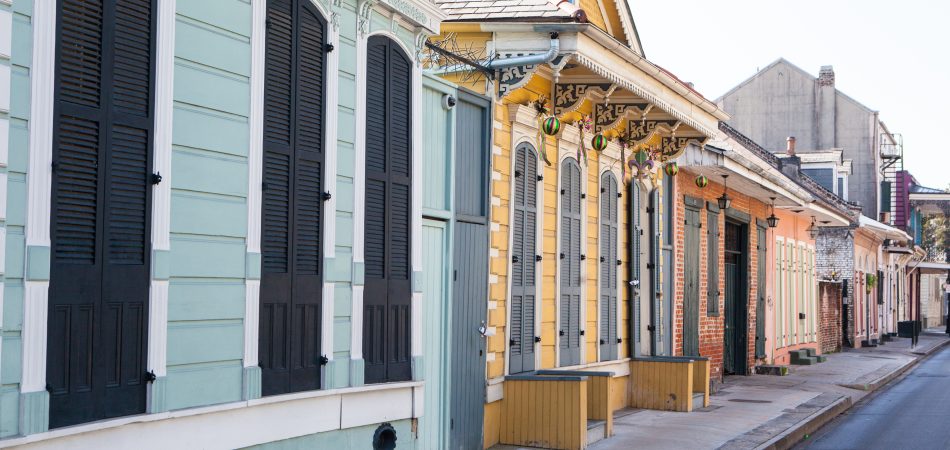
New Orleans has locally designated historic districts, and properties inside them are subject to review for exterior changes. Lighting counts as an exterior change.
Designation is by district and by property, not by how old a building looks. A house can be a century old and sit outside any designated district, while a newer building inside one is still subject to review.
The only reliable way to know is to check your specific address with the commission that covers it. Assumptions based on the neighborhood name are where homeowners most often go wrong.
Anything mounted on, attached to, or visibly altering an exterior elevation generally falls within scope. That includes fixtures on facades, under galleries, and along the street-facing perimeter.
Whether something is visible from the public right of way is often the deciding question, though not every district draws the line there. Some are written to cover exterior work whether or not it can be seen from the street, which is why the answer depends on which body reviews your address.
More than one body oversees historic property in this city, and which one applies depends on where the property sits. The French Quarter is administered separately from other locally designated districts.
Confirm which authority covers your address before submitting anything. Submitting to the wrong body costs time you usually do not have on a project schedule.
Most lighting projects that stall do so for the same handful of reasons, and most of those reasons are avoidable with earlier planning.
Review commonly considers whether a fixture is compatible with the character of the building and the district. A contemporary fixture on a nineteenth-century facade tends to draw scrutiny.
Compatible does not mean reproduction. Simple fixtures that read as neutral often move through review more easily than elaborate ones marketed as historic.
Photographs of the actual elevation help more than a product page does, since reviewers assess the fixture in context rather than in isolation. Ask what the current expectations are for your district before narrowing the shortlist.
How a fixture attaches matters as much as how it looks. Drilling into original masonry, ironwork, or millwork raises questions that surface mounting into replaceable material does not.
Reversibility is the underlying principle. Attachment methods that can be undone without leaving permanent damage generally raise fewer questions in review.
Document the mounting method in the plan rather than leaving it to the installer. A drawing showing where each fixture lands and what it fastens into answers the question before a reviewer has to ask it.
Very bright or noticeably cool-toned light on a historic facade tends to attract objection, since it changes how the building reads at night. Warmer, lower-output fixtures generally sit better in these districts.
This is also the easiest concession to make. Warmer light usually looks better on aged masonry and painted wood anyway.
Shielding and aim matter alongside output, since light spilling onto a neighboring facade reads as a change to more than one building. Keeping the light on the surface it is meant to reveal addresses that directly.
Visible conduit running across a facade is a common objection and a genuinely hard one to fix after installation. Routing has to be planned before anything is mounted.
Our residential lighting team plans concealed routing at the design stage on these properties, because retrofitting a route on a historic elevation is rarely possible without damage.
These patterns show up before submission, which makes them worth catching early.
Buying fixtures first is the single most common misstep. If review requires a change, the fixtures become a sunk cost and the project restarts.
Confirm the requirement, then shop. That order costs nothing and saves the whole purchase.
The same applies to anything scheduled around those fixtures, since an installation date built on an unapproved selection moves whenever the selection does. Confirming the requirement first keeps the calendar attached to something real.
A plan that involves cutting, drilling into original material, or removing historic elements to accommodate a fixture is going to face questions. The more of the original building the plan disturbs, the harder the path.
Look for approaches that add rather than subtract. Fixtures that mount to later, non-original material are a common workaround.
Starting before approval is the worst position to be in, because it converts a planning conversation into an enforcement one. It can also mean undoing finished work at your own cost.
There is no version of this that saves time. Beginning without confirmation reliably costs more than waiting did.
Homeowners sometimes assume a single fixture is too small to register, though scope is set by the reviewing body rather than by the size of the change. Confirm the scope with the commission covering your address rather than judging it by size.
The order below is the one that keeps a lighting project moving. Timelines vary by property and by body, so confirm specifics with the commission covering your address.
| Step | When It Happens | Why the Order Matters |
|---|---|---|
| Confirm designation and which body reviews your address | Before anything else | Determines whether review applies at all, and to whom you submit |
| Ask what the current expectations are for exterior lighting | Before selecting fixtures | Shapes the fixture shortlist instead of invalidating it after purchase |
| Design the layout, mounting method, and wiring route | Before submission | Conduit routing and attachment are the two items reviewers ask about most |
| Submit and wait for a decision | Before ordering or scheduling | Approval is never guaranteed, and conditions may change the design |
| Coordinate any electrical permit and licensed work | After design approval | Historic review and electrical permitting are separate processes with separate requirements |
Review is a scheduling reality rather than a roadblock, provided it comes first. Homeowners who confirm the requirement, design around it, and submit before buying put themselves in the strongest position when the decision comes.
At Big Easy Lighting, we design to the constraints of the property and work throughout the areas we serve, including the city’s historic districts. Call us today to plan a lighting project around the review process instead of after it.
If your property sits within a locally designated historic district, exterior changes generally require review, and lighting counts. Whether your specific address is designated depends on the district boundaries rather than the building’s age. Confirm with the commission covering your address before buying fixtures or scheduling work.
Check your specific address directly with the city body that administers historic districts, rather than relying on the neighborhood name or the age of the house. Designation is set by district boundaries and by individual property, so two houses on the same block can fall differently. This check takes minutes and settles the question.
Review generally considers whether a fixture is compatible with the character of the building and the surrounding district. Simple, neutral fixtures often move through more easily than elaborate ones marketed as period reproductions. There is no universal approved list, so ask what the current expectations are before you shop.
In many districts, rear-yard and ground-level lighting that is not visible from the public right of way is treated differently from fixtures on a street-facing elevation. Other districts are written to cover exterior work regardless of street visibility, including courtyards and rear elevations. Confirm with the commission covering your address before installing.
Yes, and it is one of the harder issues to correct after the fact. Conduit running across a historic facade is a common objection, so wiring routes need to be planned before fixtures are mounted. Retrofitting a concealed route on an original elevation is rarely possible without causing damage.
Timelines vary by the reviewing body, the scope of the change, and the submission calendar. Because the schedule is outside your control, the practical approach is to start the review conversation well before you want work to begin. Ask the commission directly what the current turnaround looks like.
Starting without approval shifts the project out of planning and into enforcement territory, and it can mean removing or altering finished work at your own expense. It may also surface later during a sale. Confirming first is consistently cheaper than undoing work that was never reviewed.
No, they are separate processes with separate requirements. Historic review addresses the appearance and physical impact of the change on the building, while electrical permitting addresses safety and code compliance. A project may need both, and design approval generally comes before the electrical work is scheduled.


