 Aug 20, 2026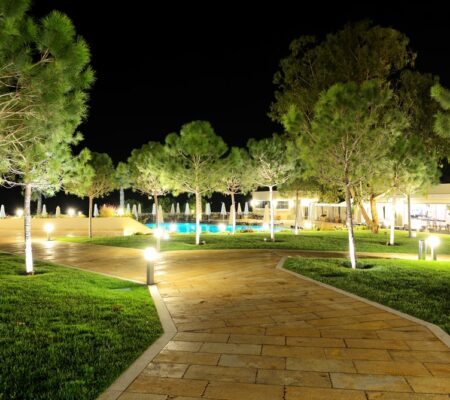
Weather-Resistant Lighting Options for Outdoor Spaces in New Orleans, LA
-
 By Admin


Opening Hours Mon - Fri: 8:00 AM - 6:00 PM

Talk to an Expert 504-784-6858
Good outdoor event lighting in New Orleans is layered rather than bright: light the paths people walk, give the bar and food their own pools of light, and leave the gathering areas dimmer so the space feels intimate. Power is the constraint most hosts underestimate, and humidity plus a sudden evening shower means every fixture and cord needs to be rated for outdoor use.
At Big Easy Lighting, we get the event call about ten days out, usually from someone who has already bought the lights. The lights are rarely the problem, but the power almost always is.
Outdoor entertaining works here almost year-round, which means the events are constant and so are the same three mistakes. Nearly all of them get settled in the planning rather than on the night itself.
This guide covers what actually works for a one-night event, how to think about power, and what our weather does to the plan. Contact us today if you want the setup handled rather than improvised.
Real talk: the instinct is to light everything, and that is what makes a yard feel like a parking lot. Event lighting is about deciding what gets light and what deliberately does not.
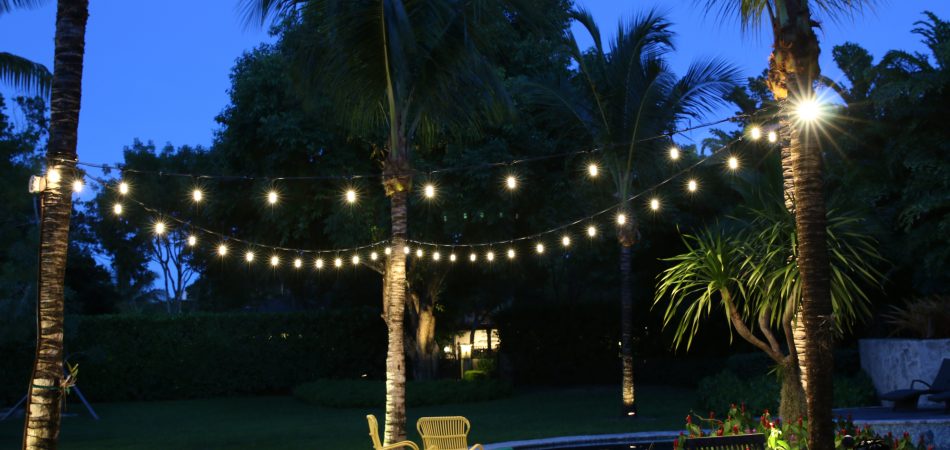
A single bright source flattens a space and puts everyone in the same harsh pool. Several smaller sources at different heights create depth, and depth is what makes a yard feel like a venue.
Think overhead, eye level, and ground level as three separate jobs. Getting all three going matters far more than the total output of any one of them.
Height is the part most people skip, because everything ends up on tables or stakes at the same level. Lifting a few sources above eye level is usually what makes a yard stop looking flat.
Before anything decorative, sort out how people get from the driveway to the yard and from the yard to the bathroom. Those routes carry every guest multiple times, often in the dark and often holding a drink.
Path lighting is the one category where function beats mood outright. It is also the thing that gets skipped most often and noticed the moment somebody trips.
Steps, level changes, and the edge of a patio deserve their own light rather than borrowing it from nearby. Those are where people misjudge distance in the dark.
Anywhere people need to see what they are doing deserves dedicated light. That means the bar, the food table, and any spot where somebody is pouring or serving.
These pools also become natural gathering points, which is useful. Lighting a table is how you tell people where to stand without saying anything.
Aim for light that lands on the surface rather than in anyone’s eyes, usually by mounting it lower or shading the source. A guest squinting at the drinks table drifts away from it.
The instinct to brighten seating areas is the one worth resisting. People relax and stay longer in lower light, and the contrast against the lit zones is what makes the whole space read as designed.
Dim is not dark. Enough light to see faces, not enough to read by.
Dimmers and lower-output fixtures both get you there. The goal is a soft floor of light that lets the lit zones stand out.
Here is where events go wrong, and it happens the same way every time. Somebody plugs the fourth string into the third extension cord, and the breaker goes.
Start by walking the yard and finding every existing outdoor outlet. Note which ones are on the same circuit, because two outlets on a patio are often fed by one breaker.
That count sets your realistic ceiling before you buy anything. It is a ten-minute job that prevents the most common event-night failure.
Test each outlet before the day of the event, since outdoor receptacles often sit unused for months and fail quietly. A ground fault outlet that will not reset is better found early than an hour before guests.
Outdoor events run on cords, and cords are where most of the trouble lives. Use cords rated for outdoor use, keep them out of walking paths, and never chain multiple cords to reach one distant spot.
A cord run through a puddle or under a rug is a genuine hazard, not just a code issue. Plan the routes before the guests arrive rather than improvising at dusk.
Where a cord has to cross a walkway, tape it down flat or run a cover over it. Mapping the routes on paper first reveals how many crossings you were about to create.
Battery-powered and solar fixtures have gotten good enough that they solve a lot of one-night problems outright. No cords, no circuit math, no tripping hazard.
The tradeoff is runtime and output. Charge everything the day before and treat them as accent rather than primary light.
Solar fixtures also depend on where they sit during the day, which is not always where you want them at night. Check that the panels get real sun rather than filtered shade.
If the event is recurring or the yard has no usable outdoor power at all, temporary solutions stop making sense. At that point, a properly installed outdoor circuit is cheaper than renting around the problem every time.
That is licensed electrician work, and our residential lighting team handles the design side alongside it.
Businesses and venues that host events on a schedule reach that point sooner than households do, which is where our commercial lighting service picks up. Either way, permanent work ends the annual scramble.
Every outdoor event here is a weather bet, and the plan should assume you lose it at least once. A sudden evening shower is normal, not exceptional.
Every fixture and every connection needs to be rated for outdoor use, and the connections matter more than the fixtures. A wet-rated string on a cord junction sitting in the grass is still a wet cord junction sitting in the grass.
Humidity does its own quieter damage. Gear stored outside between events corrodes at the contacts, which is why lights that worked last spring often do not come on this one.
The honest answer depends on how often you do this. For a single event, renting covers the gap without leaving you with a garage full of gear you will use once.
For anyone hosting several times a year, buying gets cheaper quickly, and permanent fixtures cheaper still. The break-even arrives faster than most people expect once setup labor is counted.
There is a third option people forget: install the permanent infrastructure and rent only the decorative pieces. Getting the power and the path lighting done once means every future event starts from a working baseline.
Layer the light, sort the paths first, and count your circuits before you buy anything. Those three moves cover most of what separates an event that looks designed from one that looks improvised.
At Big Easy Lighting, we design the permanent layer so your events start from working power and lit paths rather than a pile of extension cords. Call us today to talk through what your yard needs.
Work in layers rather than trying to light everything evenly. Sort out path lighting from the driveway to the yard and to the bathroom first, then give the bar and food table their own dedicated pools of light, and keep seating areas deliberately dimmer. The contrast between lit and dim zones is what makes the space feel designed.
That depends on the circuit and the lights, so the practical answer is to check the manufacturer’s stated limit for connecting sets end to end and to know which outlets share a breaker. Most event-night failures come from stacking more onto one circuit than it can carry. Counting your available circuits before buying prevents it.
Only cords specifically rated for outdoor use, and only when routed sensibly. Keep them out of walking paths, never run them through standing water, and avoid chaining several together to reach a distant spot. Cord routing should be planned before guests arrive rather than improvised in the dark.
A mix works better than any single type. Overhead lighting sets the ceiling of the space, eye-level fixtures create warmth, and ground or path lighting handles safety. Warmer color temperatures generally feel more inviting outdoors than cool white, which tends to read as utility lighting.
Yes. Fixtures and cords carry location ratings, and outdoor use requires equipment rated for damp or wet conditions depending on exposure. Indoor-rated gear used outside is a genuine safety issue in a climate this humid, not just a durability question.
For a single event, renting usually makes more sense than owning gear you will use once. If you host several times a year, buying reaches break-even quickly, especially once setup labor is counted. A middle path is to install permanent power and path lighting and rent only the decorative pieces.
Research points to blue and ultraviolet wavelengths as the main draw for flying insects, so warmer fixtures with less blue output are the safer choice, though studies comparing warm and cool white bulbs have returned mixed results. Positioning is the more reliable lever: keeping brighter fixtures away from seating tends to pull insects toward the perimeter. Neither approach eliminates them, but both help.
Assume it will at some point and build the plan around it. Outdoor-rated fixtures and cords handle water, but connection points sitting on wet ground are the weak spot regardless of rating. Elevating junctions and having a plan to move the power-dependent parts under cover matters more than the fixtures themselves.