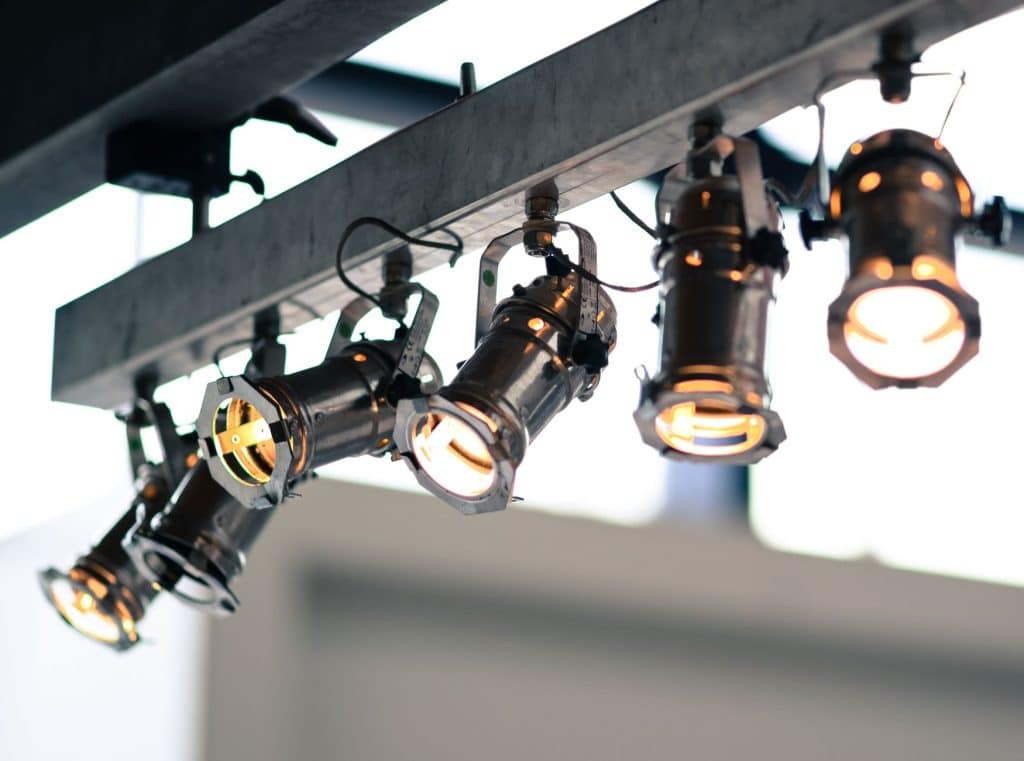
Track lighting uses adjustable heads mounted on a single rail to deliver flexible, repositionable illumination without the fixed placement of recessed cans. Current trends favor matte black finishes, low-voltage monorail systems for open-concept New Orleans homes, and integrated LED heads with higher lumen output. It works well in kitchens, galleries, open living areas, and retail spaces where lighting needs to adapt as a room or display changes.
At Big Easy Lighting, we install lighting systems for homeowners and small business owners across New Orleans and the North Shore. Track lighting has become one of the most requested options for clients who want flexibility without a full ceiling remodel.
Track lighting mounts light heads to a single rail, letting each head aim, slide, or swap independently of the others. That flexibility makes it a practical fit for open floor plans, kitchen islands, and gallery walls where a room’s function changes more than once.
This guide walks through the current track lighting trends, the difference between monorail and traditional systems, and where each option performs best. Contact us today to talk through which track lighting setup fits your space.
What Is Track Lighting and Why Is It Trending in New Orleans Homes?
Track lighting mounts adjustable light heads onto a continuous rail, letting each head aim, slide, or swap out without new wiring. One track run can light a kitchen counter, a reading nook, and an accent wall at the same time.
New Orleans homes with open floor plans, high ceilings, or historic layouts often need lighting that adapts room by room instead of following one fixed pattern. Business owners want that same flexibility so a space can evolve without cutting into plaster or drywall again.
Interest in track lighting has grown alongside open-concept renovations and gallery-style retail displays across our service areas across the North Shore and New Orleans proper. Brighter, more compact LED heads now let one track system handle both ambient and task lighting jobs that once needed separate fixtures.
How Do Monorail and Traditional Track Systems Compare?
Track lighting comes in two main formats, and the difference affects both installation and design. Here is how traditional track and monorail systems compare for New Orleans homes and businesses.
Traditional Track Systems
Traditional track runs on standard 120-volt line voltage, essentially an extension of a home’s existing electrical circuit. That keeps installation straightforward and typically more budget-friendly, since it skips the separate transformer a monorail system needs.
The track itself is rigid, so it handles straight or angled runs well but cannot curve around a room’s shape. It is a practical starting point for kitchens, hallways, and straightforward accent-lighting needs.
Monorail Track Systems
Monorail systems use a single, bendable rail that can curve and follow a room’s contours instead of running in a straight line. They typically run on low-voltage power through a transformer, which opens up a wider range of decorative fixture styles.
That added design flexibility comes with a higher per-fixture cost and a more involved installation than standard track. Monorail suits open-concept spaces or unusual room shapes where the fixture itself becomes part of the design.
Which System Fits Your Space
Traditional track is usually the better fit for straightforward kitchens, hallways, or budget-conscious upgrades. Monorail earns its higher cost in open-concept living areas, curved layouts, or rooms where the lighting run itself is meant to be a visual feature. Our residential lighting installation team can walk through which system matches the floor plan before work begins.
What Design Trends Are Shaping Track Lighting Right Now?
Track lighting has moved well past bare bulbs on a bar. A handful of clear trends keep showing up in current installations.
Matte Black and Mixed-Metal Finishes
Matte black has become one of the most requested finishes for track fixtures, often paired with brushed brass or brushed nickel accents. The dark finish blends into darker ceilings and bolder decor, which keeps attention on the light beam rather than the hardware. It is a departure from the bright white or polished chrome tracks that dominated earlier designs.
Fully Adjustable, Repositionable Heads
Current track heads pivot and rotate well beyond older fixed-aim designs, with some products swinging horizontally and tilting vertically across a wide range. That range lets one head shift from washing a wall with light to spotlighting a single object without moving the track itself. It is a meaningful upgrade for rooms that get rearranged often.
LED Integration and Color Temperature
Nearly every current track system ships with integrated LED heads rather than replaceable incandescent or halogen bulbs. LEDs run cooler and use a fraction of the electricity that older bulbs needed for comparable brightness. Most New Orleans homes land between 3000K for a warmer ambient glow and 4000K for crisper task lighting, depending on the room.
Minimal, Low-Profile Track Runs
Newer track profiles sit lower and slimmer against the ceiling than older bulky designs, so the hardware reads as a clean line instead of a visual interruption. That low-profile shift matters most in open-concept spaces, where the ceiling itself is part of the design. It pairs naturally with the matte black finish trend above.
Where Does Track Lighting Work Best?
Track lighting earns its keep in a handful of settings more than others. These are the use cases where it consistently outperforms fixed fixtures.
Kitchens and Work Surfaces
Task lighting over counters and islands typically calls for 800 to 1,200 lumens per head, positioned directly above the work surface to cut down on shadows. A typical kitchen work area generally needs somewhere around 50 to 75 lumens per square foot of task-area coverage. Track lets heads go exactly where prep work happens instead of guessing at a fixed layout.
Galleries and Art Walls
Artwork holds its true color best under a color rendering index of 90 or higher, with many gallery-style setups aiming for 95-plus. A narrow beam angle, generally in the 15 to 30 degree range, keeps the light on the piece instead of spilling onto the wall around it. Track lets a home gallery or small business rotate pieces without rewiring anything.
Open-Concept Living Areas
Open floor plans often blend a living room, dining area, and kitchen into one continuous space with different lighting needs in each zone. A single track run can shift from ambient wash to focused task light as it moves across the room. That flexibility is part of why monorail systems in particular suit open-concept New Orleans renovations.
Commercial Retail Displays
Retail spaces change their merchandising layout far more often than a home changes its furniture, and fixed recessed cans cannot keep up with that pace. Track heads reposition in minutes to follow a new display, a seasonal reset, or a rotating product line. Our commercial lighting services team installs track systems built for that kind of frequent change.
Why New Orleans Homeowners and Business Owners Choose Flexible Lighting
At Big Easy Lighting, we’ve installed track lighting across kitchens, living areas, galleries, and retail spaces throughout the New Orleans area. The right system comes down to how much flexibility your space actually needs, not just what looks good on a showroom wall.
A track system that is aimed correctly from the start saves you from re-adjusting heads season after season. Call us today to schedule a track lighting consultation for your home or business.
Frequently Asked Questions
What Is the Difference Between Track Lighting and Monorail Lighting?
Traditional track lighting runs on standard 120-volt line voltage in a rigid, straight or angled run, while monorail lighting uses a low-voltage system on a single bendable rail that can curve around a room. Monorail typically costs more per fixture and needs a transformer, but it offers more shape flexibility.
Is Track Lighting Still in Style?
Yes, track lighting remains a popular choice, especially in matte black finishes with adjustable, repositionable heads and integrated LED sources. Current designs favor slimmer, low-profile track runs over the bulkier fixtures common in earlier versions, making it a natural fit for open-concept and gallery-style spaces.
How Many Lumens Do I Need for Track Lighting in a Kitchen?
Kitchen task areas generally need about 50 to 75 lumens per square foot of coverage, with individual LED track heads over counters or islands typically producing 800 to 1,200 lumens each. Positioning heads directly above work surfaces helps reduce shadows during prep and cooking.
Can Track Lighting Be Used to Highlight Artwork?
Yes, track lighting is a common choice for galleries and art walls because each head can be aimed independently at a specific piece. A narrow beam angle around 15 to 30 degrees and a color rendering index of 90 or higher help artwork show its true color without washing the surrounding wall.
Is Track Lighting Better Than Recessed Lighting?
It depends on the goal. Track lighting can be repositioned without cutting into the ceiling, which makes it more adaptable for changing layouts, while recessed lighting spreads even, ambient light and suits lower ceilings but has a fixed direction once it is installed.
What Color Temperature Is Best for Track Lighting?
Most New Orleans homes land between 3000K and 4000K, with 3000K giving a warmer, more ambient glow and 4000K providing a crisper, more energizing light for task-focused areas like kitchen counters. The right choice depends on the room and how the light gets used.
How Much Does It Cost to Install Track Lighting?
Traditional track lighting typically runs in a lower cost range than monorail, since it uses standard line voltage and skips the transformer that monorail systems need. Exact cost depends on the number of heads, the finish, and whether new wiring is required for the run.
Can Track Lighting Be Moved or Repositioned After Installation?
Yes, that is one of its biggest advantages. Because the wiring runs inside the track itself rather than being fixed at a single point in the ceiling, heads can usually be added, removed, or repositioned along the run without a full remodel.

Big Easy LightingOutdoor and landscape lighting for homes and businesses across New Orleans and the Northshore. Free estimates and evening demos.