

 By Admin
  Aug 1, 2025
The Environmental Impact of LED Lighting: How It Lowers Your Carbon Footprint
-
 By Admin


Opening Hours 9:00 am to 6:00 pm

Talk to an Expert 504-784-6858
LED technology has taken energy-efficient lighting to the next level by providing a brighter, longer-lasting, and more sustainable replacement for incandescent bulbs in homes and businesses. LEDs use 75% less energy than incandescent bulbs, which makes them the definition of the lighting gold standard.
Talk about effective lighting, which has smart controls, and can be designed to your personal preferences. As lighting designers, we at Big Easy Lighting embrace these changes to explore effective and sustainable possibilities to meet today’s needs.
Let us help you light your space smarter—reach out to us today to get started. We’re here to make your vision shine.
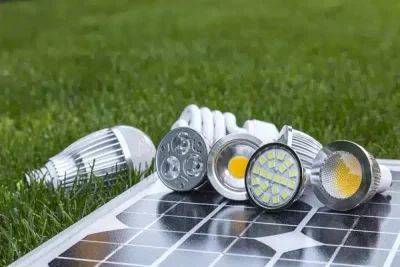
LEDs, or Light Emitting Diodes, are revolutionizing the lighting industry in terms of energy efficiency as compared to traditional bulbs. They produce more than 70% of electrical energy as visible light, whereas incandescent lights typically only produce about 5%. These efficiencies save costs and also support a sustainability mission.
The LED, in its most basic design, simply produces light by passing an electrical charge through a semiconductor to excite electrons. LED lights produce small amounts of thermal waste by design (compared to incandescent bulbs that rely on thermally induced light), but managing the thermal aspects of LEDs is critical to efficiency and life.
LEDs are available in various forms, such as bulbs, strips, and panels. They are mostly used in residential settings for ambient light, and in commercial settings, largely in panels or very high-output systems. Because they are very durable in design, they work well for outdoor use, like landscape lighting. Adjustable color temperature LED lights are also taking hold of the health-lighting area.
Besides energy efficiency, every LED has a long lifespan of tens of thousands of hours and better integration into technology, allowing for IoT connectivity for off-site monitoring. Their tunable color temperature capabilities also ensure that we can encourage better sleep types and better wakefulness characteristics.
LEDs were invented in the early 20th century, but didn’t become commercialized until the late 20th century. Technology has changed a lot in regards to LEDs; from IoT-enabled and light that accommodates our circadian rhythms, it shows how far LEDs have come. It is estimated that by 2035, LEDs will save a whopping 569 TWh annually, thus proving why LED technology is critical to addressing climate change.
LED lighting has changed how we light our spaces through lighting technology, efficiency, and versatility. This addresses key concerns of energy efficiency, sustainability, and our quality of life.
In terms of cost reductions or energy efficiency, it’s hard to deny that LEDs are revolutionary. They use 75% less power than a traditional bulb, which can equate to great savings in terms of energy bills for both the business owner and the homeowner. In energy-heavy urban environments, like New Orleans, energy-efficient lighting also helps to take some pressure off the energy infrastructure, like in buildings that rely heavily on air conditioning, since most of the energy is put into light, not heat.
Another bonus to LEDs is their long lifespan, which doesn’t require a lot of maintenance. With an amazing long life of 100,000 hours, LED lights can outlive incandescent and fluorescent options, so that often reduced maintenance cost means less intermediary outlay of having to replace light bulbs, which is extra valuable when they are put to heavy use (e.g., hotels and retail outlets).
LEDs have a much smaller environmental footprint because they don’t contain harmful substances like mercury, making disposal safer. Plus, their low energy consumption not only saves you money but also helps cut down on greenhouse gas emissions.
LED lighting designed with people in mind supports our natural circadian rhythms, promoting better health. Brighter, cooler lights during the day can lift your mood and sharpen your focus, while softer, warmer tones in the evening help you wind down for a good night’s sleep. Well-designed LED systems also reduce eye strain and improve visibility, benefiting both your health and your work output.
Smart lighting is changing how we light our environment by bringing together the power of the Internet of Things (IoT) and LED technology to optimize lighting for energy-efficient and data-driven adaptable light for use in work, home, and public spaces.
Smart LED systems offer advanced controls that let users adjust brightness and color, set schedules, and connect to their smartphones and home automation hubs for easy integration. This level of programmability allows homeowners to custom-program their lights to mimic daylight for adequate sleep, and retailers can reprogram their lights to accommodate their customers while maximizing energy efficiency.
While LED lighting is relatively efficient without the IoT, IoT makes it even more efficient by integrating advanced sensors and data analysis.
Intelligent LEDs shine in dynamic spaces, facilitating smart city initiatives by responding to pedestrian traffic and maximizing traffic flow. In the workplace, they can maximize lighting based on workspace needs, enhancing innovation and productivity.
Smart IoT systems leverage information to create efficient energy management strategies, which allow building managers to calibrate lighting schedules and reduce costs, particularly in energy-intensive industries like hospitality and large commercial real estate.
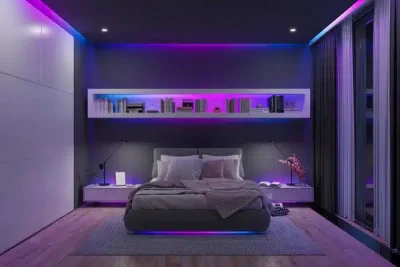
Innovation, sustainability, and integration of smart technology are quickly pushing the LED lighting market towards energy-efficient solutions that are also environmentally friendly.
The latest LED systems break 200lm/W efficiency today, cutting costs exponentially and driving greater appeal for home and commercial applications. Users can modulate color temperatures using tunable white technology, duplicating natural light and boosting wellness, productivity, and mood.
Human-centric lighting coordinates artificial light with our native circadian rhythms using tunable white LEDs to shift from blue-tinted light in the daytime to warmer colors at night. This benefits alertness, mood, and sleep, and hence is applied in workplaces, schools, and hospitals.
Smart LEDs that are connected to the internet form networks that adjust brightness and color based on environmental conditions, improving energy efficiency and individualization of the light.
Coming advances in research aim to extend LED life, reduce production costs, and reduce its carbon footprint, with forward-looking technologies like micro-LEDs and quantum dots.
Future Projections LEDs will further lead the way in energy efficiency, sustainability, and human-centric design, transforming our lighting experience.
LED advancements are transforming how we illuminate spaces, with energy efficiency, longevity, and smart control. We can create a better living through lighting with these advancements, and it is both efficient and stylish. From homes to businesses, LEDs provide smart, affordable solutions. At Big Easy Lighting, we can help you unlock your lighting potential and create customized, effective, and stunning solutions.
Looking to upgrade your space? Call us today or reach out online—we’ll work with you to find the lighting setup that fits your style and budget. Let’s brighten up your space together!


