Good exterior lighting for a New Orleans restaurant or bar works in layers: a lit sign and facade so people find you, a bright and even entrance so they feel safe walking in, warm and dimmable light on the patio or courtyard so they stay, and steady light on the walk back to the car. Patio fixtures need the right wet or damp location rating, and any building in a historic district should confirm fixture changes with the local commission first.
At Big Easy Lighting, restaurants and bars are among the commercial properties we light across the greater New Orleans area, and their lighting has a job to do every single night. A dark office building loses nothing after six o’clock. A restaurant with a dim entrance loses the couple who walked past, glanced in, and kept going.
Good commercial outdoor lighting for a hospitality business comes down to one question: what does a guest see, step by step, from the street to the table and back again? Answer that well and the fixtures almost choose themselves.
This guide stays with the restaurant and bar side of things. It covers the parts of the outside of the building a guest actually moves through, how patio light should feel, and what our climate asks of the equipment.
Why Restaurant Lighting Plays by Different Rules
A retail store wants its windows bright. An office wants its parking lot safe. A restaurant wants both of those things and one more: a mood. That last part is where many exterior lighting plans go wrong.
The usual mistake is treating the whole outside of the building with one type of fixture. Bright floodlights over a patio make the parking lot feel secure and the dining area feel like a gas station. Soft string lights everywhere look lovely on the patio and leave the front steps in shadow.
Hospitality lighting works when each area gets light suited to what people are doing there. Walking needs even light. Reading a menu needs enough light on the table. Lingering over a drink needs less light, and warmer light, than almost anywhere else on the property.
The Four Places a Guest Walks Through
It helps to map a restaurant’s exterior the way a guest experiences it. Each of these areas gets its own plan, and they are wired so they can be controlled separately.
The Street View and the Sign
This is the first impression, and it often happens from a car. The sign should be readable from the distance people actually approach from, and the facade should be lit enough to show the building is open. Grazing light across brick, stucco, or a painted storefront gives the building some depth without washing it out. In a city full of beautiful old buildings, letting the architecture show at night is one of the simplest ways a restaurant can advertise.
The Entrance
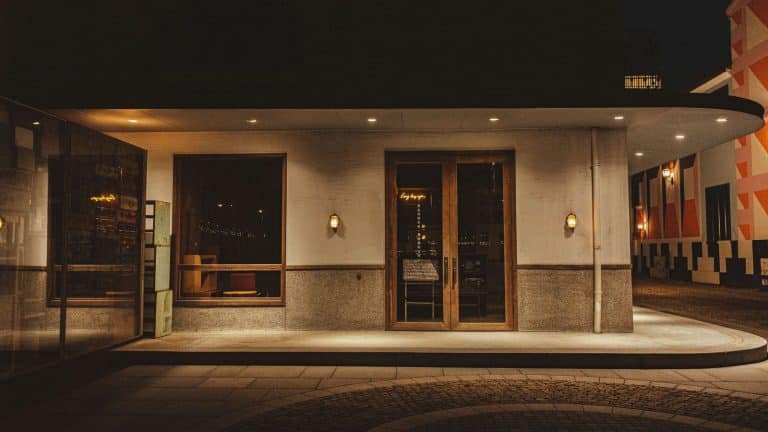 The door is where guests decide whether they feel welcome. It needs to be the brightest point a guest walks through, evenly lit, with steps, ramps, and thresholds clearly visible. Uneven sidewalks and raised entries are common in New Orleans, so a single shadowed step is a real trip hazard. A host stand or menu board near the door should be lit well enough to read without a phone flashlight.
The Patio or Courtyard
This is where guests spend the most time outside, and where lighting has the biggest effect on how long they stay. It gets its own section below, because it is where most of the decisions are.
The Path Back to the Car
Guests leave in the dark, often after a drink or two. Parking areas, side lots, and the walk from the door to the street should be lit evenly enough that nobody is stepping from a bright entry into a black hole. Even light also helps security cameras capture usable images after closing.
Getting Patio and Courtyard Light Right
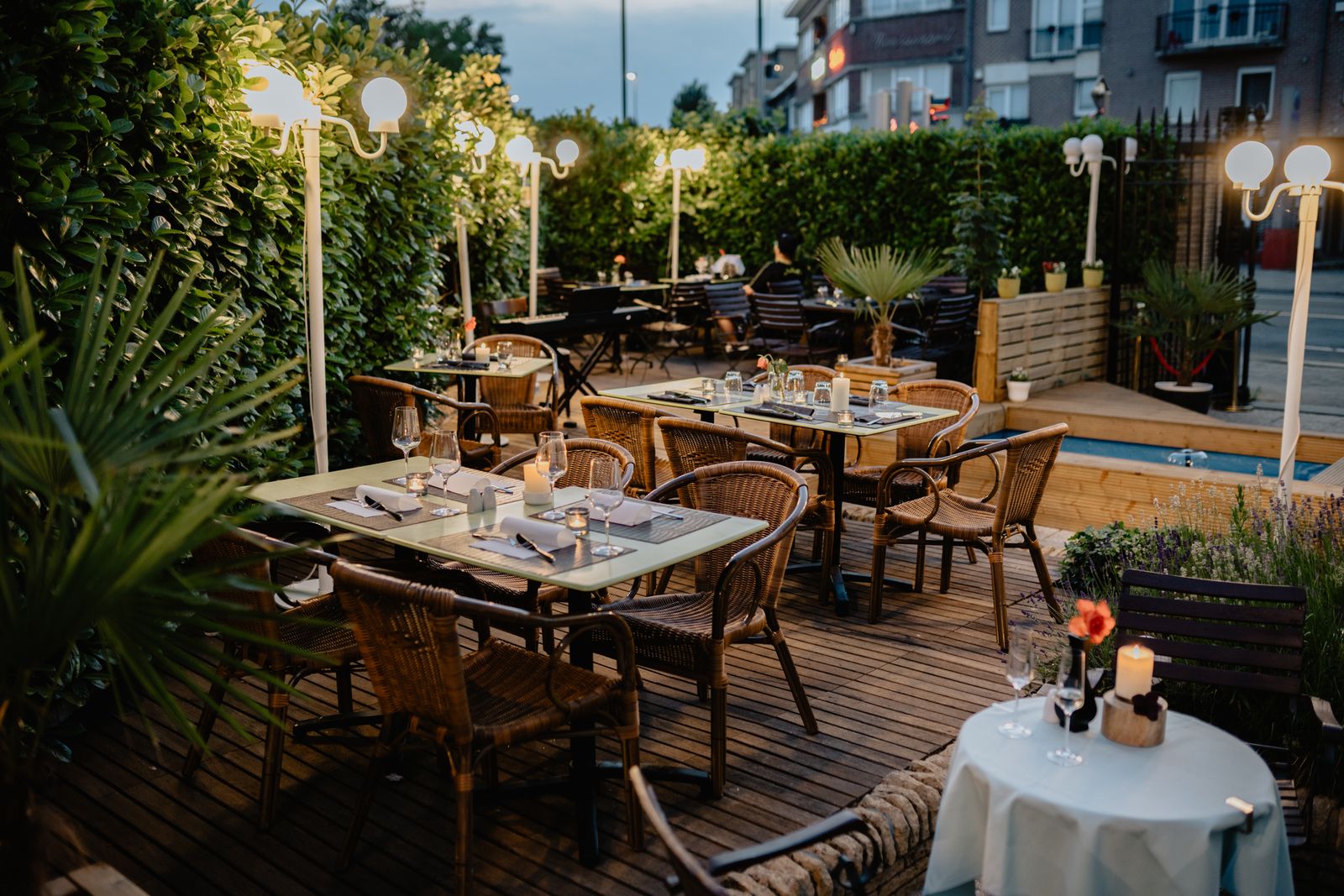
Outdoor dining is a big part of how New Orleans eats and drinks, and patio light is the part guests notice without thinking about it. Three things make most of the difference.
Warm Color Temperature
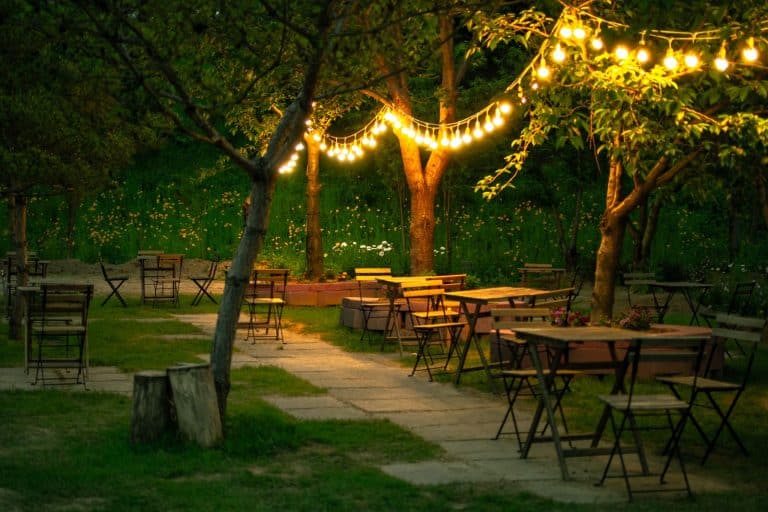 Color temperature describes how warm or cool white light looks. Dining areas usually look best with warm white light, typically in the 2700K to 3000K range. Cooler, bluer light reads as clinical outdoors and makes food and skin tones look flat. Good color rendering matters too, so food, drinks, and faces look the way the kitchen intended.
Keep Glare Out of Guests’ Eyes
Glare is the fastest way to make a patio uncomfortable. Exposed bulbs at eye level, bright fixtures aimed outward, or a flood mounted on the building that shines straight across the seating all push guests to squint or move. Shielded fixtures, downlights from above, and light bounced off walls or trees keep the area bright enough to see the plate while the source itself stays out of view.
Dimming and Separate Controls
The patio at a 5 PM happy hour and the same patio at 10 PM need different light. Dimmable fixtures and separate circuits for the patio, the entrance, and the parking area let staff adjust each one without touching the others. Timers or a simple control panel take the guesswork out of it, so nobody has to remember to switch the sign on at dusk.
What Our Climate Asks of Hospitality Fixtures
New Orleans humidity, heavy rain, and storm season are hard on outdoor equipment, and a restaurant patio adds hosing down, spilled drinks, and constant foot traffic. Two basics matter here.
First, every fixture should carry the right location rating. Fixtures exposed directly to rain need a wet location rating. Fixtures under a covered porch or awning, where they are protected from direct water but still exposed to moisture, need at least a damp location rating. An indoor fixture hung outdoors may look fine for a season before it fails.
Second, outdoor receptacles and circuits that serve patios should have GFCI protection, which shuts power off quickly when current leaks to ground. Which protection applies to a specific property is a question for a licensed electrician or the local permitting office. If you are choosing finishes and materials for the long haul, our guide to weather-resistant lighting options goes deeper on that side of the decision.
Historic Storefronts, Balconies, and Narrow Frontages
Plenty of the city’s best restaurants sit in historic buildings with courtyards, balconies, and frontages right on the sidewalk. Those spaces give a restaurant enormous character and a few extra constraints.
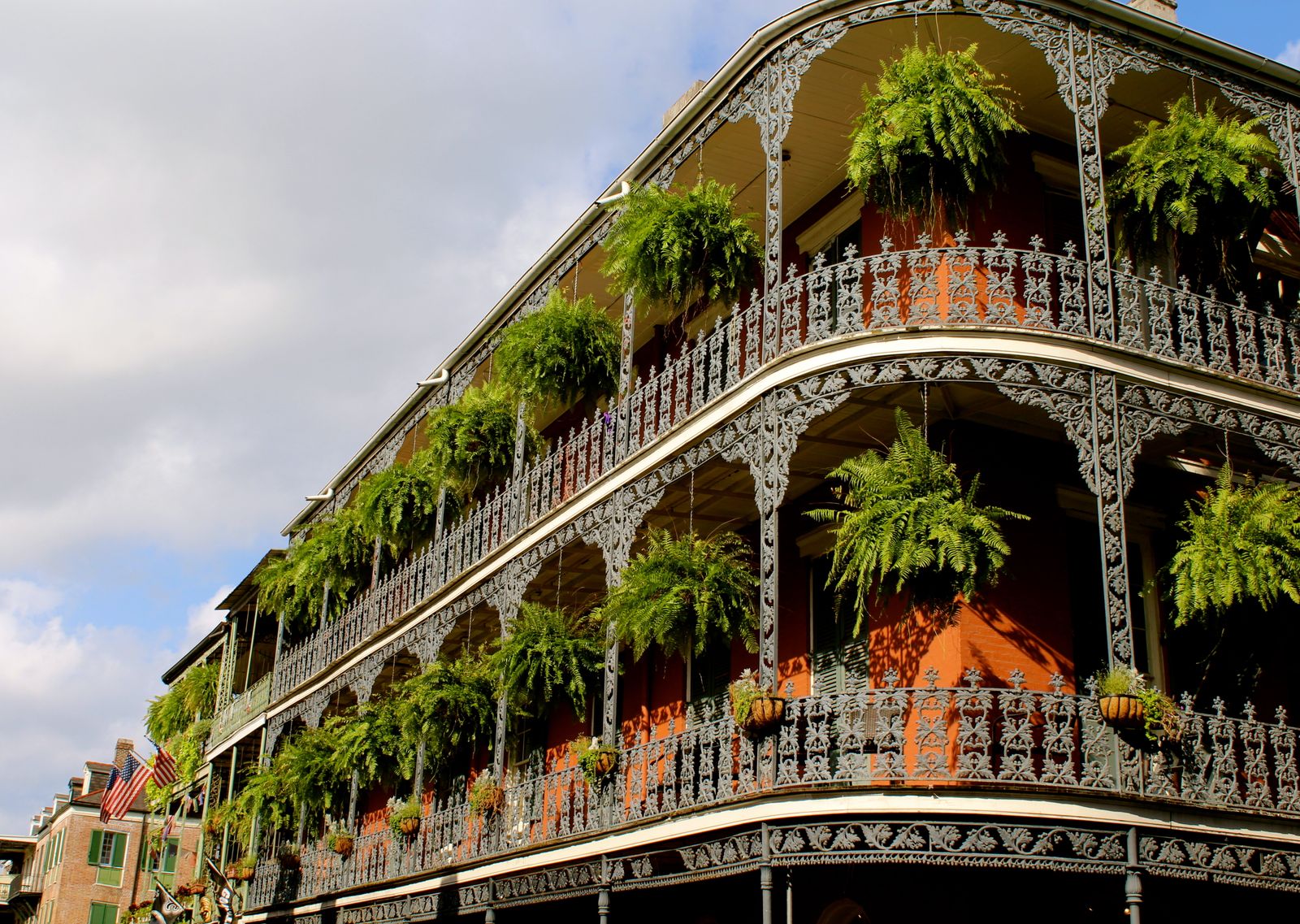
A courtyard enclosed by old masonry can be lit almost entirely by light bounced off its walls, which keeps fixtures small and out of sight. A balcony over the street can be lit from below with discreet fixtures so it reads as part of the facade from the sidewalk. Wiring in these buildings needs to be routed carefully, since visible conduit across a historic facade is usually the first thing that looks wrong.
If the property is in a historic district, exterior fixture changes may need review before they go up. Our post on historic district lighting guidelines explains the general process. Confirm the specific requirements with the local historic district commission before any work starts.
Bars and Late-Night Venues
A bar’s exterior has a longer night than a restaurant’s. The patio may stay busy well after the kitchen closes, and the sidewalk out front can fill up at closing time. That shifts the priorities a little.
Entrance and sidewalk lighting carry more weight, because staff need to see who is coming and going and guests need to see where they are stepping. Patio lighting can run lower and moodier than a dinner crowd would want. Security lighting on side doors, trash areas, and back lots matters more, since those spaces are used late by staff closing up.
Plan the Exterior Around Your Guests
The best way to judge a restaurant’s exterior lighting is to walk it at night the way a guest would. Start across the street, walk to the door, sit on the patio, then walk back to where you parked. Every spot where you hesitated, squinted, or reached for your phone light is a place the plan can improve.
If you would like a second set of eyes on that walk, our team plans commercial lighting for restaurants, bars, and hotels across the greater New Orleans area. Request a free estimate or call (504) 784-6858, Monday through Friday, 8 AM to 6 PM.
Frequently Asked Questions
What Is the Best Lighting for a Restaurant Patio?
Warm white light, typically in the 2700K to 3000K range, from shielded or indirect fixtures that light the tables without shining in guests’ eyes. Dimmable fixtures on their own circuit let staff lower the light as the evening goes on.
Do Outdoor Restaurant Fixtures Need a Special Rating?
Yes. Fixtures exposed directly to rain need a wet location rating, and fixtures under a covered porch or awning need at least a damp location rating. Using indoor fixtures outside usually leads to early failure in New Orleans humidity.
How Bright Should a Restaurant Entrance Be?
The entrance should be the brightest point a guest walks through, with even light across the door, steps, and any ramp. The exact light level depends on the building and how people approach it, which a site assessment can settle.
Can Exterior Lighting Be Installed in a Historic Building?
Usually, yes, with care. Small fixtures, light bounced off existing walls, and carefully routed wiring work well in historic buildings. If the property is in a historic district, confirm requirements with the local historic district commission before any fixtures go up.
Should Patio Lighting Be on a Separate Circuit?
It helps. Separate circuits for the patio, the entrance, the sign, and the parking area let staff adjust each one on its own, so the patio can be dimmed for the evening without darkening the walkways guests use to leave.

Big Easy LightingOutdoor and landscape lighting for homes and businesses across New Orleans and the Northshore. Free estimates and evening demos.