 Feb 16, 2026
The Best Waterproof Garden Lights For Every Budget
-
 By Admin


Opening Hours 9:00 am to 6:00 pm

Talk to an Expert 504-784-6858
Energy-efficient LEDs are a premier, cost-effective lighting solution, consuming 75–90% less energy than traditional incandescent bulbs and lasting up to 25 times longer.
Switching to energy-efficient LEDs is one of the simplest ways to lower electricity bills and reduce energy consumption. LEDs use up to 75% less energy than traditional incandescent bulbs and last up to 25 times longer, according to the U.S. Department of Energy. They deliver bright, high-quality light while producing far less heat and waste.
For homeowners and businesses across New Orleans, upgrading to LED lighting is a practical investment that pays for itself within months. Big Easy Lighting provides professional LED lighting design and installation for residential and commercial properties throughout the Greater New Orleans area. Contact us today to request a free estimate.
 LED stands for light-emitting diode, a semiconductor device that produces visible light when an electric current passes through it. Unlike incandescent bulbs that rely on heating a filament, LEDs generate light through a process called electroluminescence. This means they convert a much larger share of electrical energy directly into light rather than wasting it as heat.
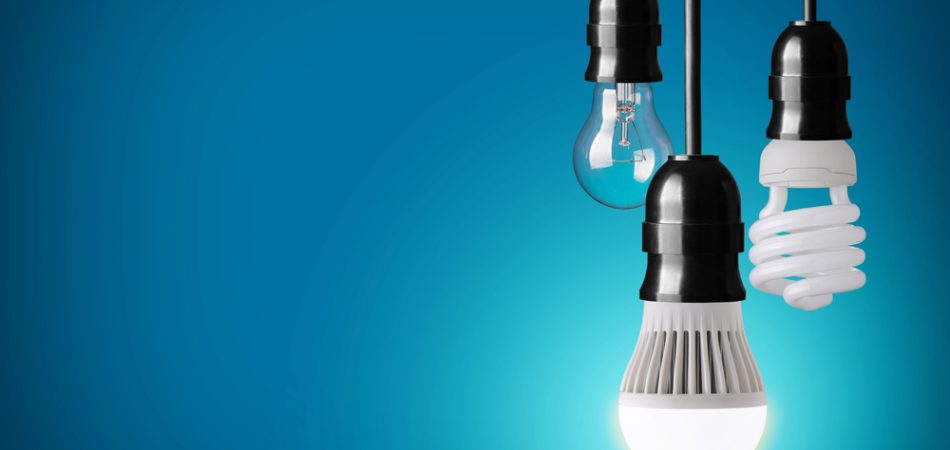
Incandescent bulbs release roughly 90% of their energy as heat and only about 10% as visible light. LEDs reverse that ratio, making them far more efficient for any application. A 10-watt LED bulb produces the same brightness (about 800 lumens) as a 60-watt incandescent bulb while drawing a fraction of the power.
The performance gap between LEDs and older bulb types is significant across every measurable category.
LED lighting offers measurable advantages for reducing environmental impact beyond simple energy savings.
The carbon footprint of lighting depends on how much electricity is consumed and how that electricity is generated. Because LEDs draw far less power, they produce fewer CO2 emissions over their lifespan.
Replacing 30 incandescent bulbs with LEDs can reduce annual CO2 emissions from approximately 4,500 pounds down to roughly 451 pounds, based on standard U.S. electricity grid calculations.
 A single LED bulb that lasts 25,000 hours replaces dozens of incandescent bulbs over the same period. Fewer bulbs manufactured, shipped, and discarded means less packaging waste and fewer spent bulbs ending up in landfills. Since LEDs are also free of toxic mercury, they pose less risk when recycled or disposed of.
Municipalities and businesses across the country have adopted LED conversions as part of broader sustainability programs. Large-scale LED streetlight projects in major U.S. cities have demonstrated significant reductions in both energy consumption and maintenance costs at the municipal level.
The upfront cost of LED bulbs is higher than incandescent bulbs, but the long-term savings are substantial.
The U.S. Department of Energy reports that the average household saves about $225 per year in energy costs by switching to LED lighting. Businesses and commercial properties with higher lighting demands often see proportionally larger savings. Lighting accounts for approximately 15% of a typical home’s electricity usage, making it one of the easiest categories to optimize.
Because LEDs last 25 to 50 times longer than incandescent bulbs, the cost and labor involved in replacing burned-out bulbs drops dramatically. This benefit is especially valuable for commercial properties, warehouses, and outdoor installations where bulb access can be difficult or require professional service.
At average U.S. electricity rates, a single LED bulb replacing a 60-watt incandescent typically pays for itself in energy savings within two to six months of daily use. Over a 10-year period, total savings per household, including both energy and replacement costs, can exceed $2,000.
LEDs are effective in virtually any lighting application, and their versatility makes them a strong fit for both indoor and outdoor spaces.
LEDs also offer instant-on capability with no warm-up time, unlike CFLs that can take several seconds to reach full brightness. Paired with smart home systems, motion sensors, or timers, LEDs give property owners full control over their lighting schedules and energy usage.
 Switching to LEDs does not require a full-scale renovation. A practical approach starts with the highest-use fixtures in your home or business and expands from there.
Begin by identifying the rooms or areas where lights stay on the longest each day, such as kitchens, living rooms, offices, or exterior security lights. These fixtures will deliver the fastest return on your LED investment.
When selecting replacement bulbs, focus on lumens (brightness) rather than watts. An 800-lumen LED provides the same light output as a 60-watt incandescent while using only 8 to 12 watts. Look for ENERGY STAR-certified products, which are tested for both performance and longevity.
Check with your local utility provider for available rebates or incentive programs that can offset the cost of LED upgrades.
Upgrading to energy-efficient LED lighting reduces your electricity bills, lowers maintenance costs, and supports a smaller environmental footprint. For professional LED lighting design and installation in New Orleans and surrounding areas, call Big Easy Lighting at 504-784-6858 to schedule a free estimate and find the right lighting solution for your home or business.
The U.S. Department of Energy estimates that the average household saves about $225 per year in energy costs by using LED lighting instead of incandescent bulbs. Savings vary based on the number of fixtures, daily usage hours, and local electricity rates. Businesses with more lighting typically save even more.
Quality LED bulbs last between 25,000 and 50,000 hours under normal use. Standard incandescent bulbs last about 1,000 hours, and CFLs last roughly 8,000 hours. In practical terms, a single LED bulb used for three hours per day could last over 20 years before needing replacement.
Many LED bulbs are dimmable, but you need to select bulbs specifically labeled as dimmable and confirm compatibility with your existing dimmer switch. Older dimmer models designed for incandescent bulbs may cause flickering or reduced performance with LEDs.
Yes. LEDs use up to 75% less electricity than incandescent bulbs, which directly reduces the CO2 emissions tied to electricity generation. They also last much longer, resulting in fewer bulbs manufactured and discarded. Unlike CFLs, LEDs contain no mercury, making them safer to recycle.
Outdoor-rated LED fixtures are built with solid-state construction and sealed housings designed to withstand moisture, heat, and temperature changes. Many products carry IP65 or higher ratings, making them well-suited for the Gulf Coast climate. Big Easy Lighting installs weather-rated LED systems designed specifically for outdoor conditions in the Greater New Orleans area.